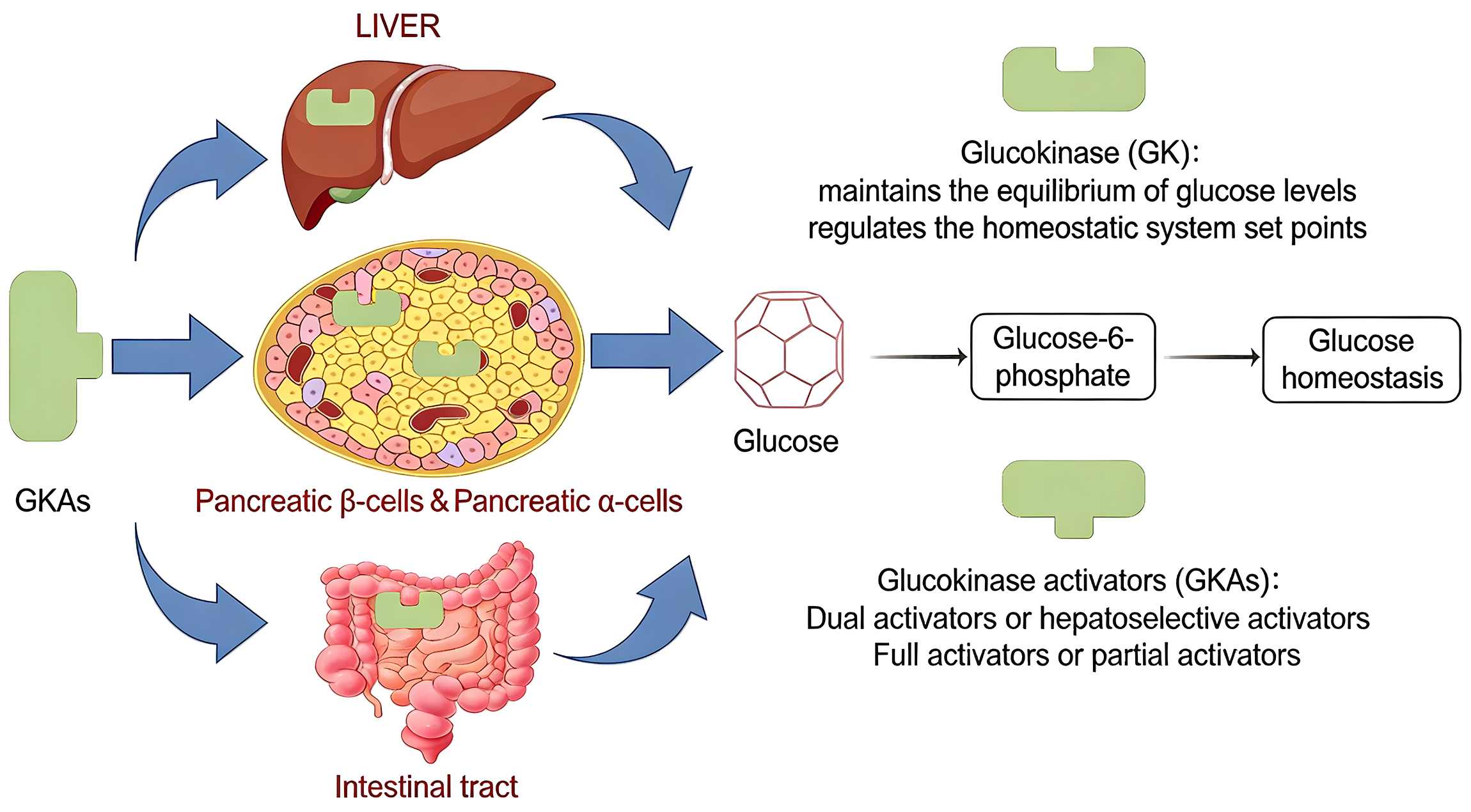
The Molecular Thermostat Tuning Glucose’s Delicate Balance
At the heart of human metabolic health is glucose homeostasis—the precise regulation of blood sugar levels—guided by a quiet cellular conductor: glucose kinase (GK), a molecular “thermostat” that maintains glucose equilibrium by setting the body’s homeostatic system points. Found across three critical metabolic tissues— the liver, pancreatic α/β-cells, and the intestinal tract—GK triggers the conversion of glucose to glucose-6-phosphate, the foundational step in locking in the balanced fuel flow cells need without destabilizing the body. Enter glucose kinase activators (GKAs): a versatile class of compounds (including dual or hepatoselective variants, plus full or partial activators) that target GK in these tissues, amplifying its function to fine-tune glucose’s path through the liver, pancreas, and gut; for conditions like diabetes, where this balance unravels, GK and its activators represent a pivotal therapeutic frontier—resetting the “thermostat” to restore the body’s natural glucose regulation, turning a cellular workhorse into a potential lifeline for metabolic wellness.
Li, W.X. et al. / J. Chin. Pharm. Sci. 2026, 35 (2), 115–130.



 >
> >
>